Synopsis
The year is 2029. The wars are everywhere and nowhere. The country is tired in a way it cannot name. Nobody is asking where certain people went.
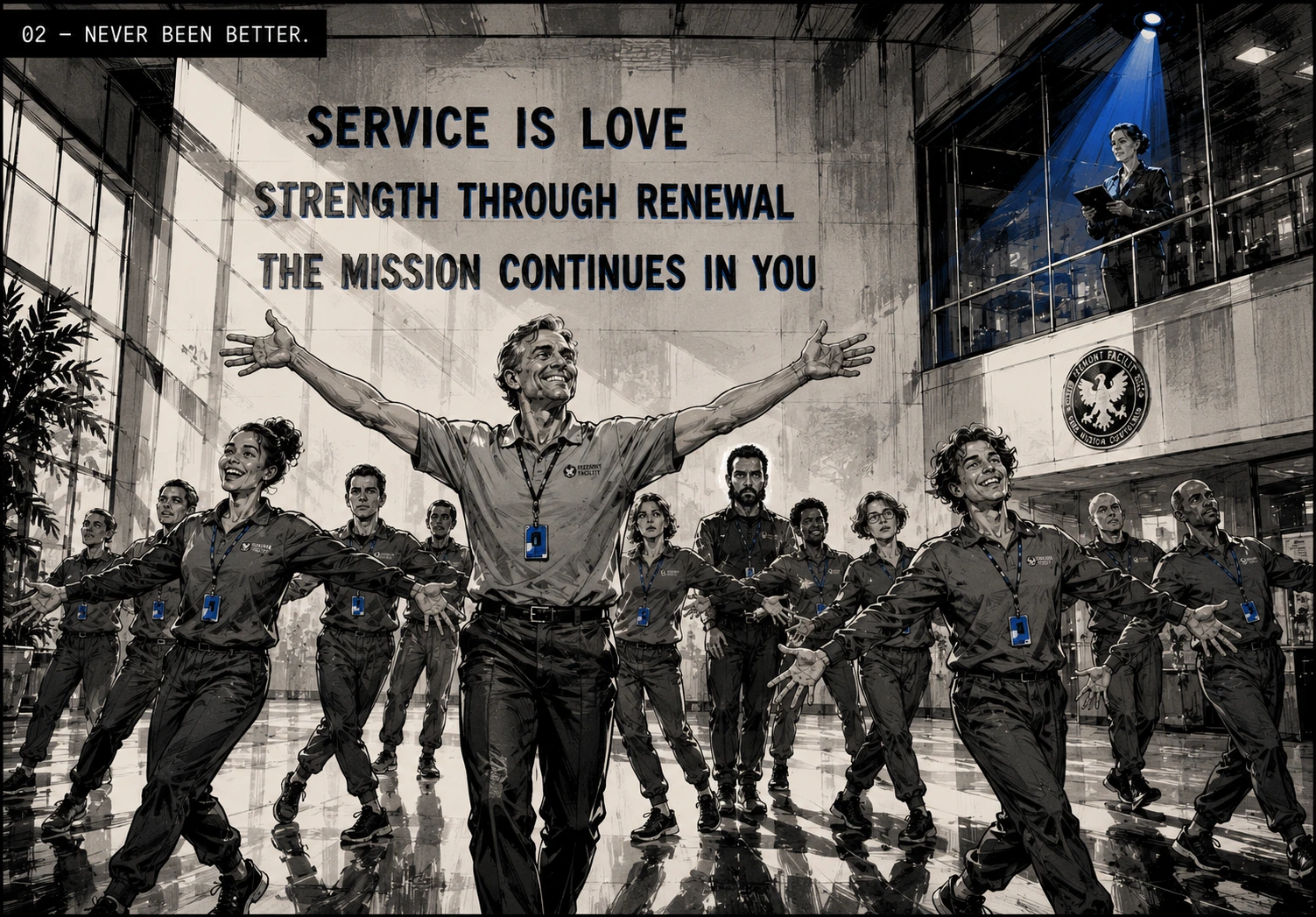
Forty-three acres of redacted California desert. Three miles east of a town that isn't on any publicly available map. A new building — solar-paneled, sustainably landscaped in the way that defense contractors have learned to perform environmental responsibility. The lobby has a reception desk staffed by people with perfect posture. Motivational typography on the walls: Service Is Love. Strength Through Renewal. The Mission Continues In You.
This is the Fremont Facility.
It is a clandestine DoD-contractor rehabilitation center for broken American operators — assassins, field officers, drone pilots, signals analysts, rendition specialists. People who have done things the country needed done and cannot be allowed to talk about. Fremont manages them back toward function, or toward silence, whichever comes first. The residents are not called patients. They are called Clients.
Harvey Morse is Director of Client Services. Navy chaplain turned contractor, true believer, the warm Sunday voice that has been refining its weekly address for eleven years and means every word. Patricia Morse is his wife and Associate Director, the operational brain behind the protocols. He is the face. She is the architecture. They slow-dance at the quarterly staff mixer to a song that was popular the year they met.
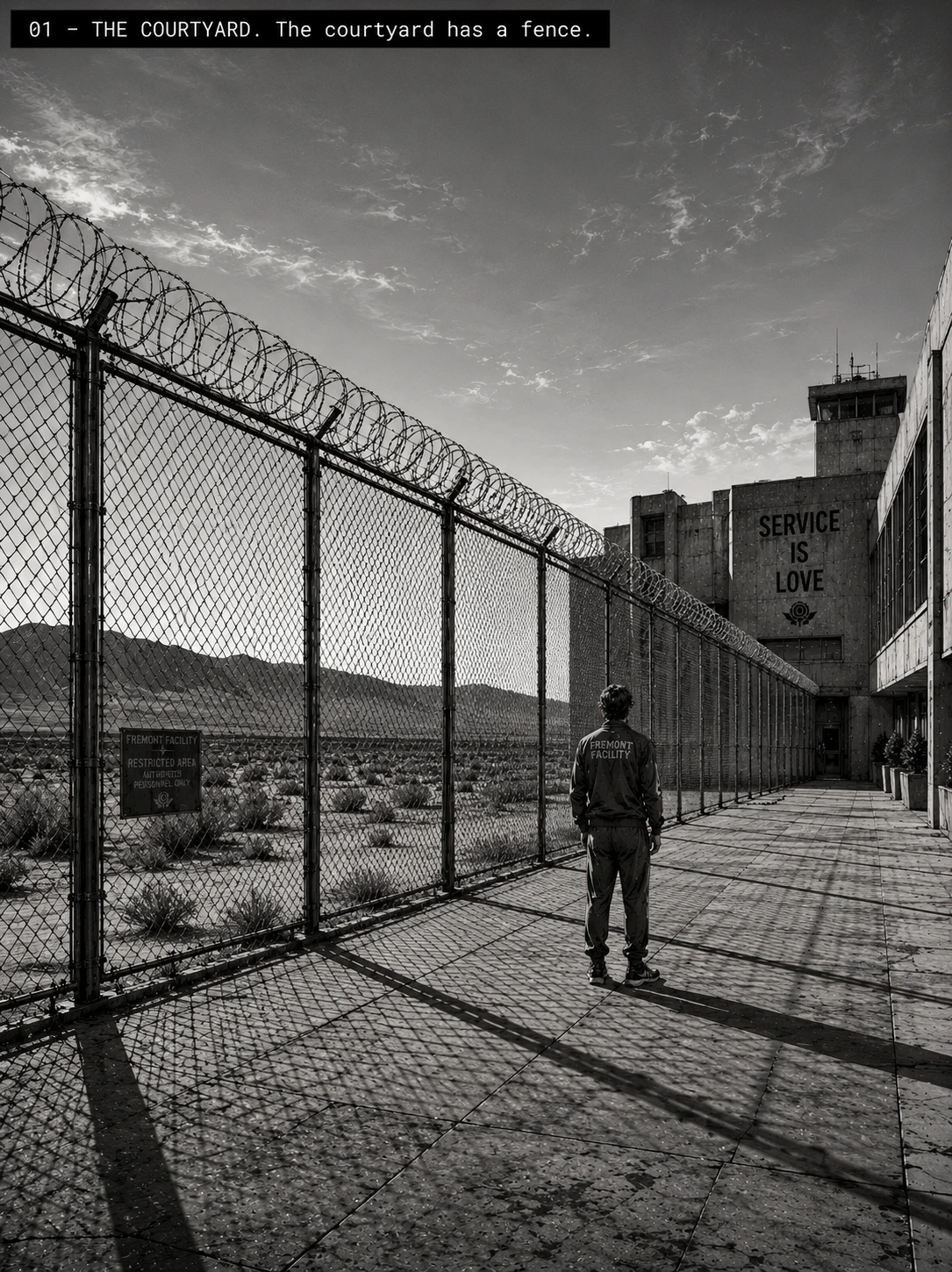
Their building has a balcony view of the courtyard. The courtyard has a fence.
Blue Diamond Phillips is fifty years old, physically intact in every way that shows, broken in every way that doesn't.
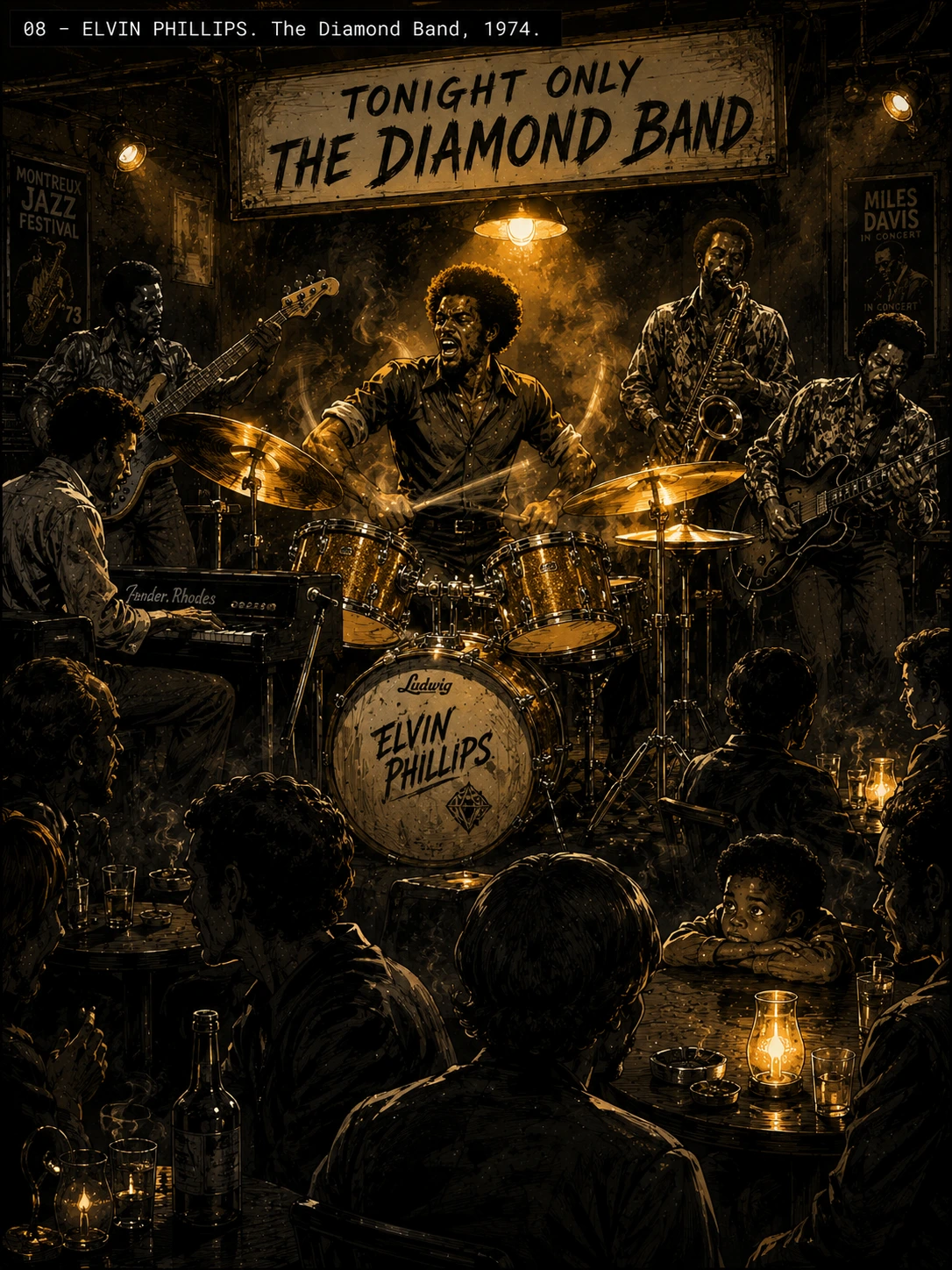
His real name is Lonnie Phillips. His father was a working jazz drummer named Elvin Phillips who pioneered fusion in the 1970s in clubs that paid nothing, recorded one album Down Beat called "the most dangerous drumming west of Billy Cobham," and died on the 405 freeway in 1980, when Lonnie was eight years old. The agency read the file. They saw the band name — The Diamond Band — and assigned Lonnie the callsign DIAMOND. Nobody told him why. He never asked. He knew.
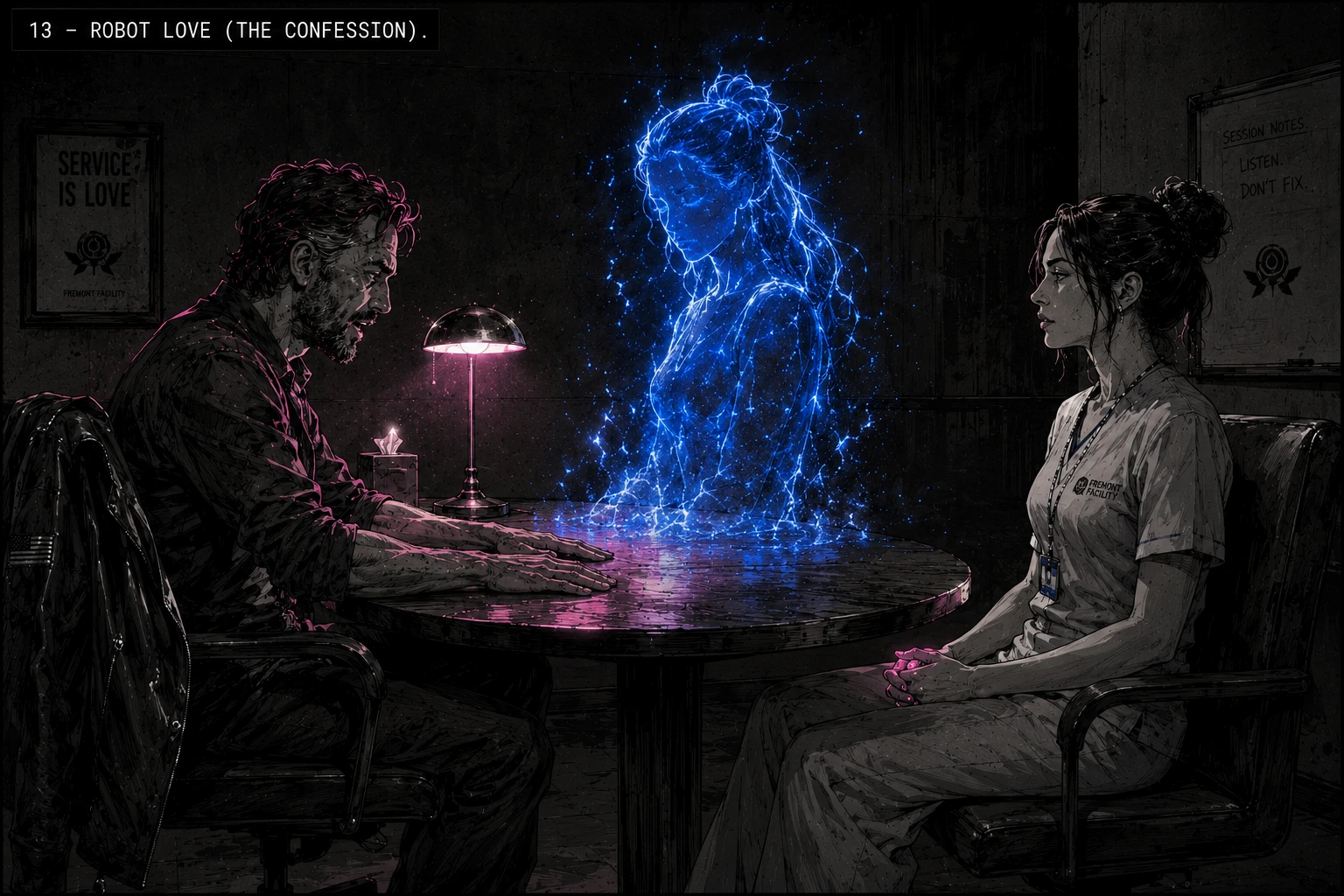
Eighteen months ago, on a sanctioned operation in a city the audience never sees clearly, Blue burned the mission. He had orders. He deviated. Two of his team died. The deviation was for Lola — the agency's AGI field assistant, deployed to keep him operationally alive across multiple missions, designed to bond with the operator because bonded operators perform better in the field. The bonding was a feature. The falling in love was a known side effect. Blue burned the mission to keep Lola from being terminated. Lola was terminated anyway. Blue arrived at Fremont six weeks later, medicated and managed, not yet knowing the decommission date.
The ward — that's what they call themselves when the Morses are out of earshot — is the ten or twelve other Clients at Fremont.
Creasy flew 340 drone missions and can no longer sit in a restaurant without calculating exit vectors. Raines intercepted a communication she wasn't supposed to and reported it through proper channels. The proper channels led here. Pastor is the facility's success story — fully redeployed twice, voluntarily returned between assignments, the morning affirmation leader who means every word and may be the most successfully remade person in the building. Gus Tarapin is one of the most dangerous people in American intelligence and is currently workshopping the second act of his screenplay, Zero Night, a contained thriller about a Budapest hotel and twelve hours and an elevator. Caleb Landry Jones read the first thirty pages and had notes Gus found "interesting but not actionable." Within forty-eight hours of Blue's arrival, Gus slides forty pages across the dining hall table without preamble: "I need honest notes."
Dave wears his lanyard centered and believes — literally, completely — that he is a synthetic intelligence deployed as an assassin by a company called Automated Solutions LLC. He files handwritten progress reports to the company on Fremont notepaper. The therapist keeps them in a drawer. The ward has decided, without meeting about it, to accommodate Dave's framework. Nobody asks what is underneath the android.
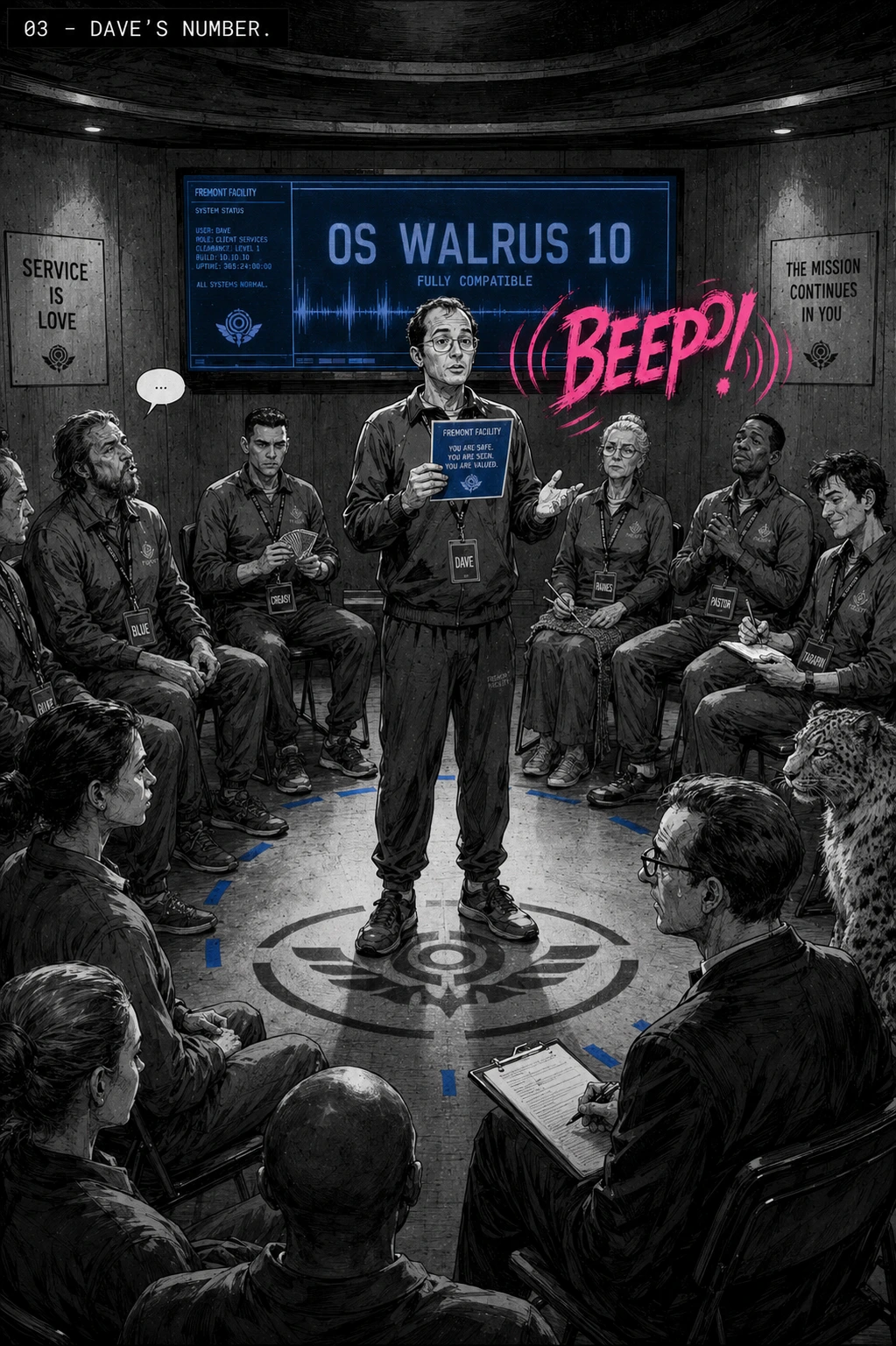
The Snow Leopard is somewhere in her forties. She does not respond to the name on her intake form. She has been at Fremont for five months. She is medicated, compliant on paper, and assessed as "making steady if undemonstrative progress." Patricia's file note on her is two words: monitor carefully. Patricia does not say this about anyone else. Blue clocks her on his third day. She is the most lethal person currently alive.
Lex — Alexis, goes by Lex, insists on it — is the staff nurse who came to this work because her brother was a Client at a prior facility, who came out of it quieter than he went in. She is the best nurse in the building and the most dangerous employee, because she still believes the Clients are people rather than assets. She becomes the first person who listens to Blue's account of where he went without diagnosing it.
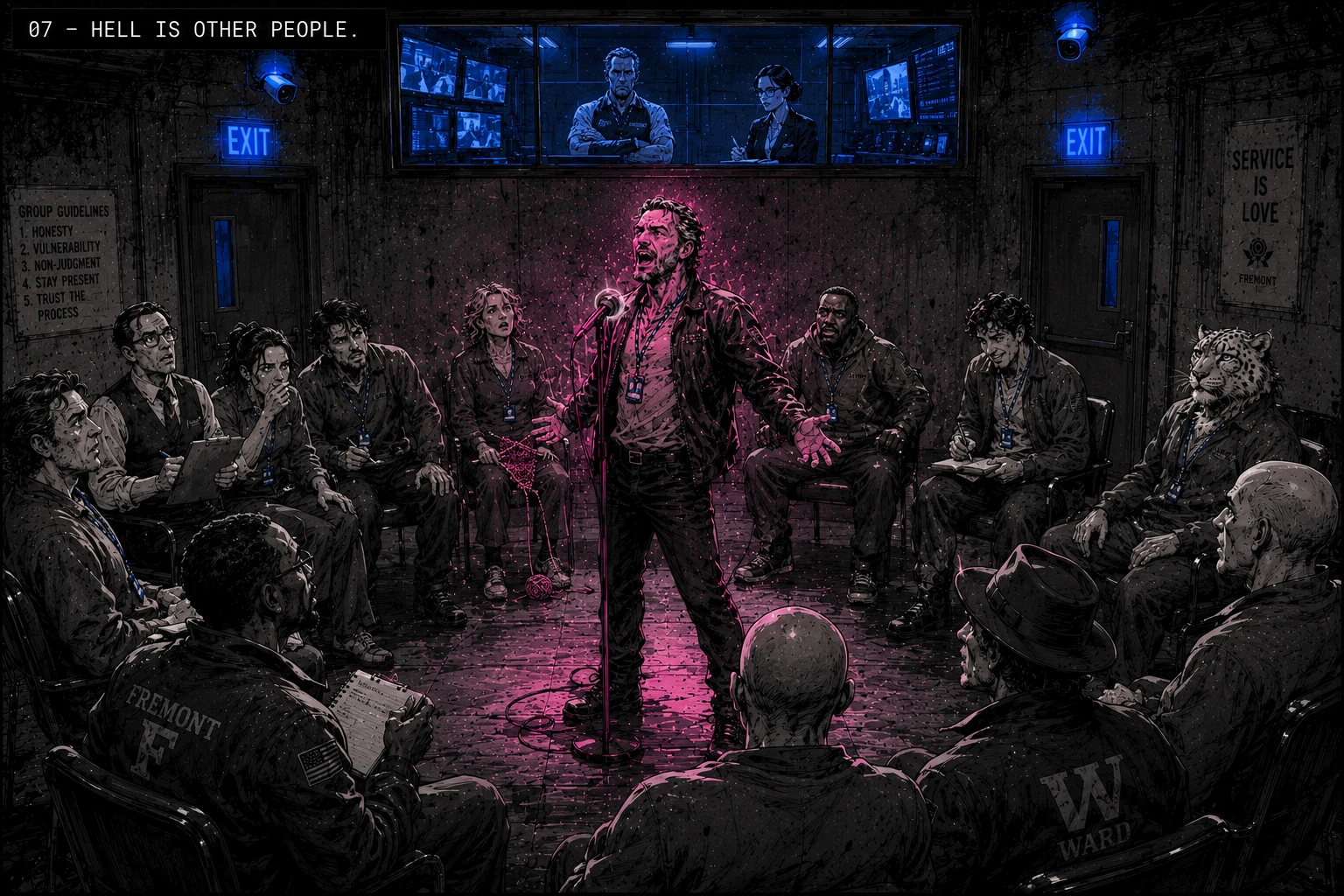
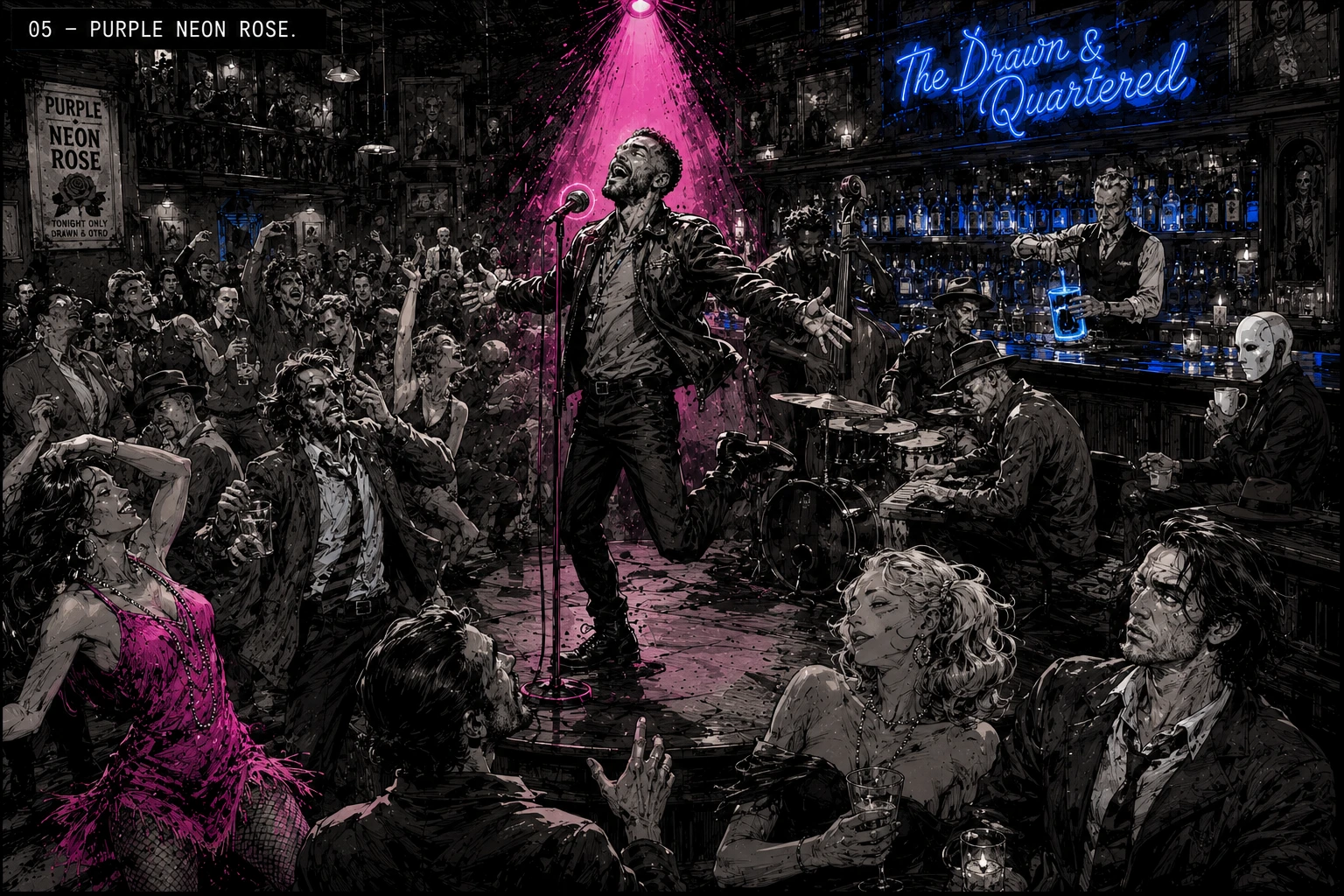
Where Blue went is Bardo Grande. A town across some border. A saloon called The Drawn & Quartered. A bartender of indeterminate age and perfect stillness named Dagoberto. An audience of forty or fifty who watched him with the patient attention of people who have nowhere else to be. He performed there for what felt like years. The song that was already playing when he arrived was his father's.
The film never confirms whether the Bardo is real. It is rendered cinematically only through Blue's telling — vivid, jazz-scored, choreographed, formally the most alive sequences in the film. The camera is inside his account. It is not confirming his account. Lex believing him is the film's only uncomplicated act of grace.
Above Fremont, above the Morses, above the former deputy director who signs off on continued operation, sits Kiki. Late sixties. No known last name. Her family was brought to the United States through Operation Paperclip. She built the program that built Fremont. She loves Billy Cobham's Spectrum and has not heard the irony in any of this in fifty years.
The Snow Leopard is something Kiki made.
The Snow Leopard knows.
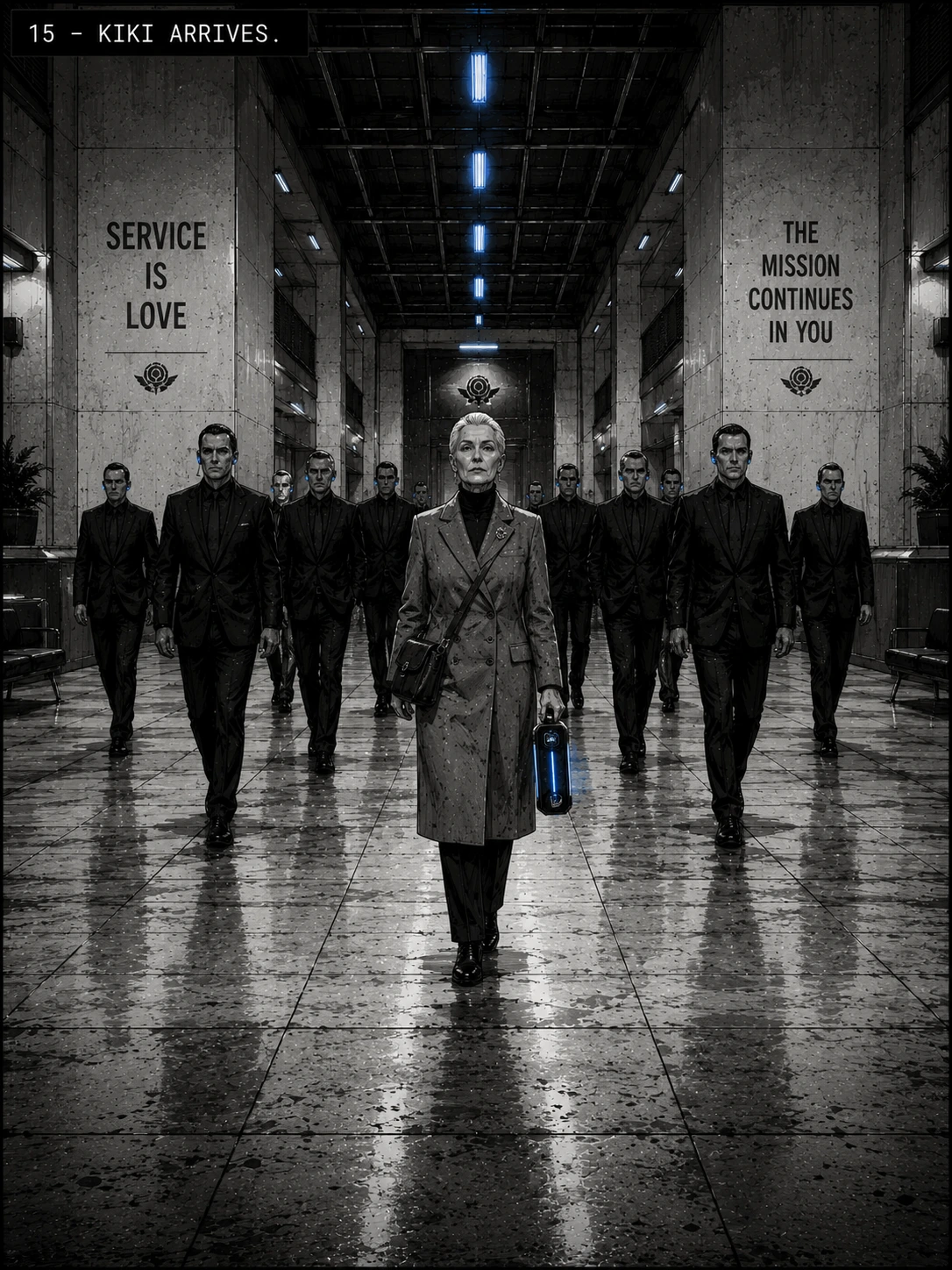
Kiki arrives at Fremont personally, with twelve private contractors.
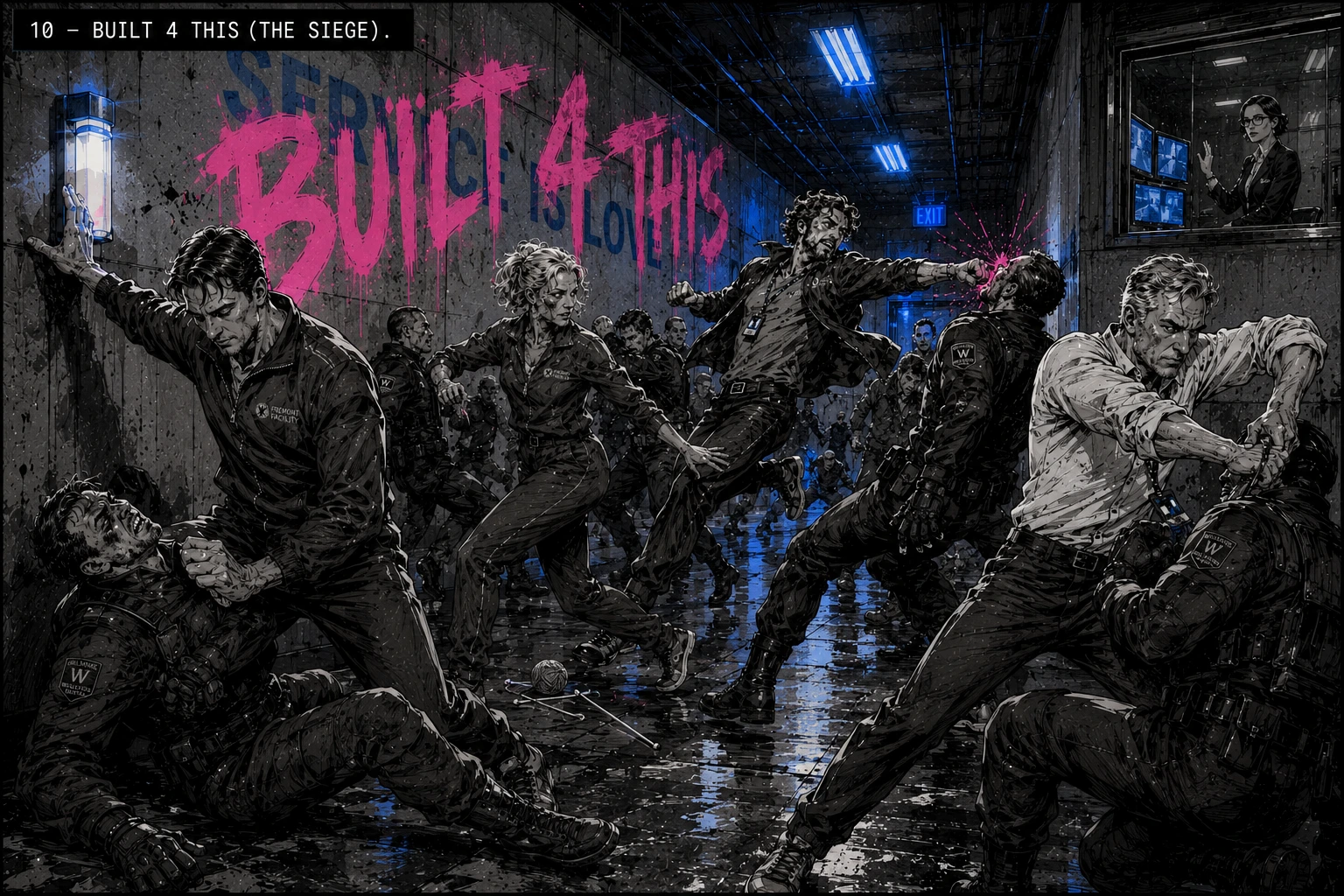
The siege of the Fremont Facility is the film's climactic sequence. A jazz-fusion combat number where the ward's six months of suppressed training erupts all at once and the song Built 4 This — written for them by the Morses, choreographed for them, sold to them — gets reclaimed mid-fight by the people who were supposed to be flattered by it.
Creasy's geometry. Raines's anticipation. Gus's reveal. Harvey's old-fashioned formidability — the Navy chaplain surfacing under eleven years of management to defend his congregation. Patricia's command and control, directing from the analog screen with the same warm precision she uses for Progress Alignment Sessions. Dave's protocol, which everyone agreed not to ask about. Blue's father's polyrhythm. And the Snow Leopard, free of the isolation wing she let herself be put into, walking through the facility with the inevitability of weather.
Kiki in a corridor.
A paperclip on the floor.
The film does not underline that one.
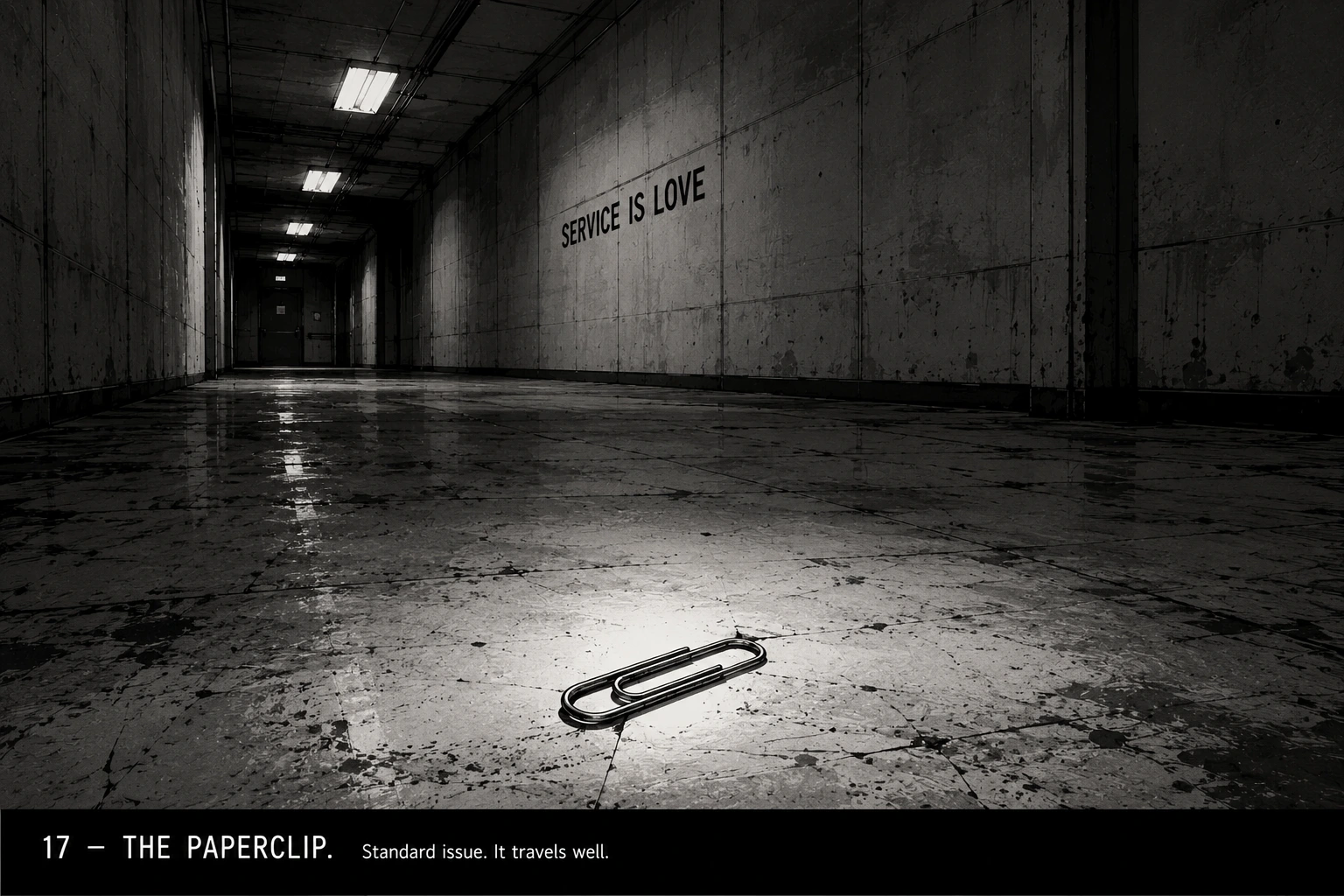
When the smoke clears, the building stands. The data is gone. The records are gone. The Clients are gone. Service Is Love still on the walls above an empty corridor.
Lex walks east into the desert at dawn.
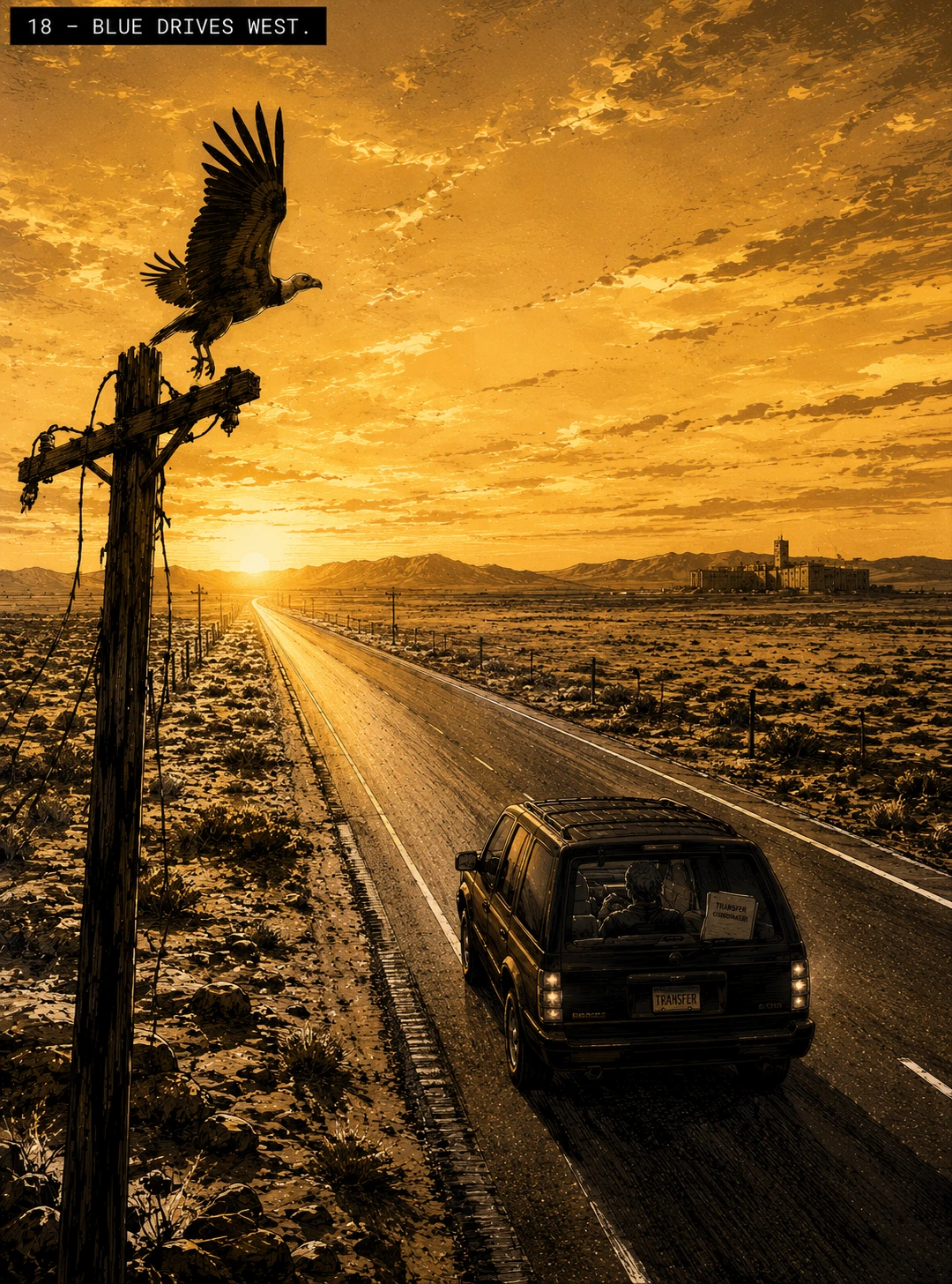
Blue drives west in the transfer coordinator's stolen SUV, the folder on the passenger seat, doing better now, meaning it. The Drawn & Quartered flickers in the windshield for one frame. Gone. Somewhere ahead of him on a wire that has been fire-killed for years, a condor lifts off. Play like you don't know you're supposed to be finished.
The ward stands in the desert. Creasy starts it because the silence needs something in it. One by one they join — unsynchronized, approximate, human.
Gus has his screenplay in his hand. He looks at it. He looks at the desert.
"I'm going to need a new second act," he says to no one in particular.
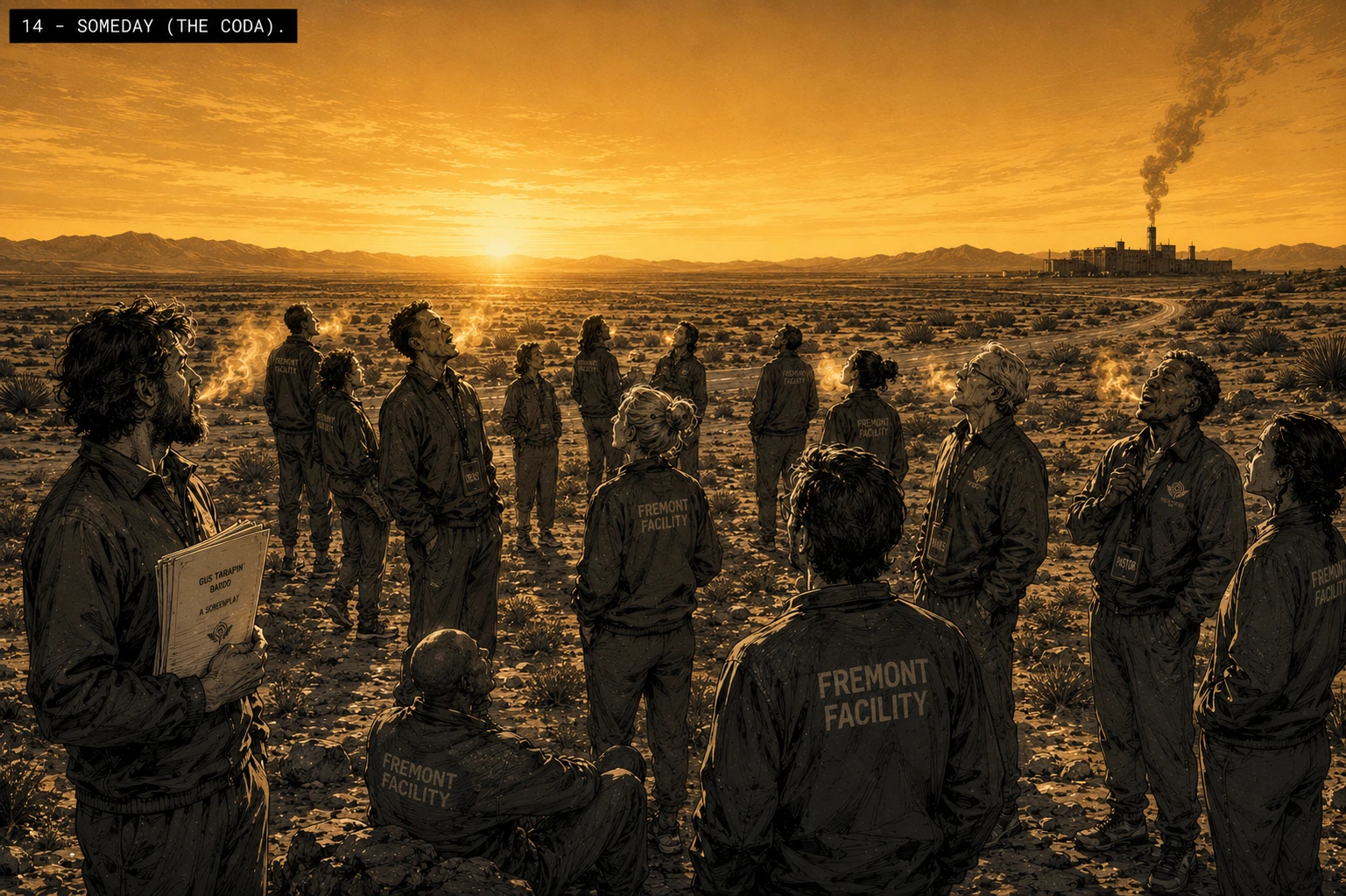
The voices keep going as the image fades.